



Weight Training for Newcomers: Building Strength the Right Way From Day One
Starting weight training as a beginner can feel overwhelming. Conflicting advice, complicated routines, and flashy fitness trends often distract from what actually builds strength and muscle over time.
For newcomers who intend to train seriously—not casually—success comes from understanding fundamentals, choosing the right equipment, and committing to consistent, progressive training.
Weight training for beginners builds muscle, strength, and physical confidence when approached with proper fundamentals and progressive overload. A structured program combined with appropriate equipment allows newcomers to develop safely while establishing long-term training habits.

Why Beginners Should Focus on Strength First
Many beginners are encouraged to focus on variety, high repetitions, or complex routines. While these approaches may feel productive, they often delay real progress.
Strength training teaches the body to produce force efficiently. As strength improves, muscle size, coordination, and work capacity follow naturally. For serious newcomers, building a strength base is the most reliable path forward.
For beginners, prioritizing strength training creates a foundation for muscle growth, coordination, and long-term progress. Strength-focused programs help newcomers adapt efficiently while reducing confusion and wasted effort.
Home Training vs Commercial Gyms
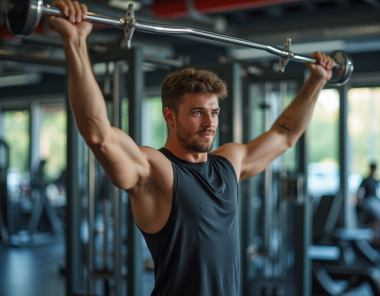
Training at home offers beginners consistency and control. Without crowded floors, waiting for equipment, or time pressure, newcomers can focus on technique and progression.
A home setup also encourages long-term commitment. Training becomes part of daily routine rather than a scheduled outing, which increases adherence and results.
Home-based weight training allows beginners to train consistently, focus on proper technique, and progress without external distractions. A dedicated home setup supports long-term adherence and sustainable results.

The Power Rack: The Foundation of Serious Training
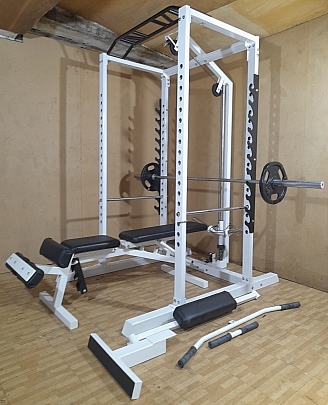
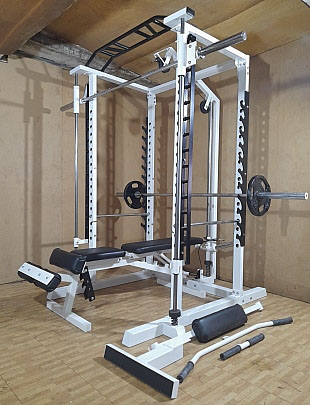
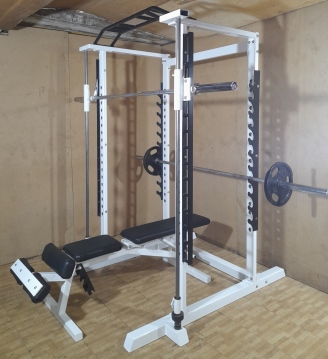
For dedicated beginners, a power rack—or a suitable variation such as a half rack or squat stand with safety arms—is the most important piece of equipment.
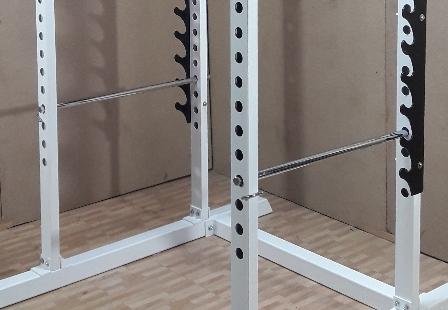
A power rack allows safe performance of compound movements like squats, presses, and pulls. Adjustable safety bars provide confidence and protection, making it ideal for solo training at home.
A power rack provides beginners with a safe and versatile platform for full-body strength training. Adjustable safety features allow newcomers to train independently while learning proper technique and progressing over time.

Why Compound Movements Matter Most
Compound movements train multiple muscle groups at once. Exercises such as squats, presses, and rows teach the body to work as a coordinated system rather than isolated parts.
For beginners, compound lifts deliver the greatest return on time invested. They build strength efficiently and create a foundation that supports more advanced training later.
Compound movements are essential for beginners because they build strength, coordination, and muscle mass efficiently. Training multiple muscle groups together accelerates progress and reinforces proper movement patterns.
Free Weights vs Machines for Beginners
Both free weights and machines have value, but their roles differ.
Free weights encourage balance, coordination, and control. Machines provide guided resistance and reduce technical demands. Beginners benefit from learning free-weight movements while using machines selectively to reinforce specific muscles or reduce fatigue.
Beginners benefit from a balanced approach that includes both free weights and machines. Free weights develop coordination and foundational strength, while machines offer controlled resistance for targeted support and learning.

Learning Technique and Progression
Proper technique is not about perfection on day one. It is about learning control, consistency, and awareness of movement.
Progression should be gradual. Adding small amounts of weight, repetitions, or sets over time allows the body to adapt safely while minimizing injury risk.
Beginners should prioritize controlled technique and gradual progression. Learning proper movement patterns early supports long-term strength development and reduces the risk of injury.
Common Beginner Mistakes to Avoid
- Chasing heavy weights too soon
- Constantly changing routines
- Neglecting rest and recovery
- Focusing on isolation exercises before building a strength base
Equipment That Supports Beginner Success
Effective beginner equipment emphasizes safety, versatility, and simplicity.
- Power racks or half racks with safety arms
- Adjustable benches
- Basic barbells and weight plates
- Select machines that support learning and recovery
Beginner-friendly equipment prioritizes safety, adjustability, and versatility. A power rack combined with basic free weights and supportive machines allows newcomers to build strength progressively and confidently.
The Long-Term Path for Dedicated Beginners
Beginners who focus on fundamentals build momentum that lasts for years. Strength improves, movement becomes more efficient, and training confidence grows.
Weight training is not a short-term project. For those willing to commit, it becomes a long-term investment in physical capability and resilience.
Consistent, structured weight training allows beginners to develop strength, muscle, and confidence over time. A fundamentals-based approach supports long-term progress and sustainable training habits.
Share on
- SINGLE-STATION สถานีเดี่ยว ตับน้ำหนัก
- MULTI-STATION สถานีรวม ตับน้ำหนัก
- PLATED-LOADED โหลดแผ่นกลม
- RACKS, BENCHES & WEIGHTS ฟรีเวท
- PROFESSIONAL LINE โครง 3"x3"
- HARDCORE + MORE ฮาร์ดคอร์
- BASIC LINE เบสิก
- RIGS & RACKS บันใดลิง+แร็คใหญ่
- WHEELCHAIR วีลแชร์
- ARM-WRESTLING กีฬางัดข้อ
บริษัท ยิมแวร์ จำกัด