


Introduction
Whether you’re preparing for your first amateur match or outfitting a training space for seasoned pullers, the table you use matters far more than most people realize. A well-designed arm-wrestling table is not just furniture—it’s equipment. It impacts safety, technique, leverage, and the quality of training sessions.
This article breaks down exactly what defines a good arm-wrestling table, covering both official competition standards and practical training setups.
Key Features of a Proper Arm-Wrestling Table
1. Table Height
- Standing tables: 40 inches / 101 cm
- Seated tables: 28 inches / 71 cm
The correct height ensures athletes can safely apply back pressure, side pressure, and upward movement without awkward posture.
2. Surface Dimensions
- Width: 36 inches / 91 cm
- Depth: 26 inches / 66 cm
These dimensions offer enough space for dynamic pulling while keeping elbows controlled within the pads.
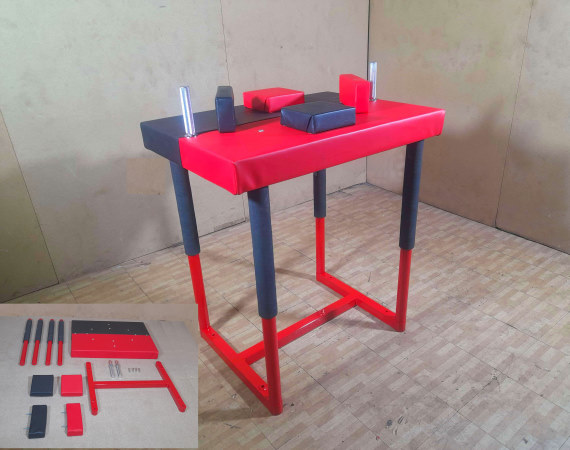
3. Pads: Elbow Pads & Pin Pads
Elbow Pads
- Size: 7" × 7" (18 × 18 cm)
- Dense foam with minimal give
- Placed symmetrically left and right
A good elbow pad allows smooth sliding without sinking too deep, helping maintain joint alignment.
Pin Pads
- Height: 4 inches / 10 cm
- Firm, high-resilience foam
- Placed on each competitor’s winning side
Pin pads absorb impact at the moment of victory and reduce injury risk.
4. Hand Pegs (Grip Handles)
- Two vertical pegs—one for each competitor’s free hand
- Height: 6–8 inches
- Steel or composite material with a comfortable grip
Hand pegs stabilize the athlete’s torso and prevent excessive body movement, improving referee control.
5. Frame Construction & Stability
A competition-worthy table must be highly stable and durable:
- Heavy-duty steel or reinforced alloy
- Zero wobble under lateral pressure
- Strong welds and solid joints
- Rubber feet to prevent sliding
Even minor wobbling can create dangerous joint torque, especially for beginners.
Competition Table vs. Practice Table
Competition Table
Official competition tables must meet strict standards:
- Exact dimensions
- Firm, regulation-grade pads
- Fixed height
- Heavy, extremely stable frame
- Precise elbow boundaries
Goal: Fairness, consistency, and maximum safety during matches.
Practice Table
Practice tables offer more flexibility and can be tailored to different training environments:
- Slightly softer elbow pads (for long sessions)
- Optional adjustable legs (standing or seated)
- Wider table surface for additional drill work
- Removable or adjustable hand pegs
- Lighter but still stable frame
- Additional padding for beginners
Goal: Comfort, versatility, and accommodating different training volumes.
Safety Considerations
A good table actively minimizes injury risks to the wrists, elbows, shoulders, and upper arm.
Look for:
- Rounded edges
- Non-slip surfaces
- Stable, reinforced frame
- Proper elbow containment
- Sufficient padding and firm pin pads
Unstable or poorly sized tables are a common contributor to arm breaks in inexperienced pullers.
Conclusion
A great arm-wrestling table is built with precision, stability, and athlete safety in mind. Competition tables follow strict regulations, while practice tables allow more flexibility as long as core safety principles remain intact.
Quality equipment = better training = long-term strength with reduced injury risk.